What stands out is not who won but how flatly the result held across the electorate. Every age band from the youngest to the oldest voters landed within a few points of the same three-to-one verdict, an unusual convergence for a housing question, where generational stakes in property usually pull hard in opposite directions. Shared ownership sits awkwardly between renting and owning, and the vote suggests voters of every cohort see its unsellable end-state as a shared design flaw rather than a private misfortune.
If there was a wobble, it came from the middle-aged rather than the young or old: the 35-44s gave the weakest margin of any group, still comfortably in favour but noticeably less lopsided than their neighbours. That is the age cohort most likely to be mid-mortgage on exactly these products, and their relative caution reads less as opposition to buybacks than as a keener sense of the scheme's practical costs.
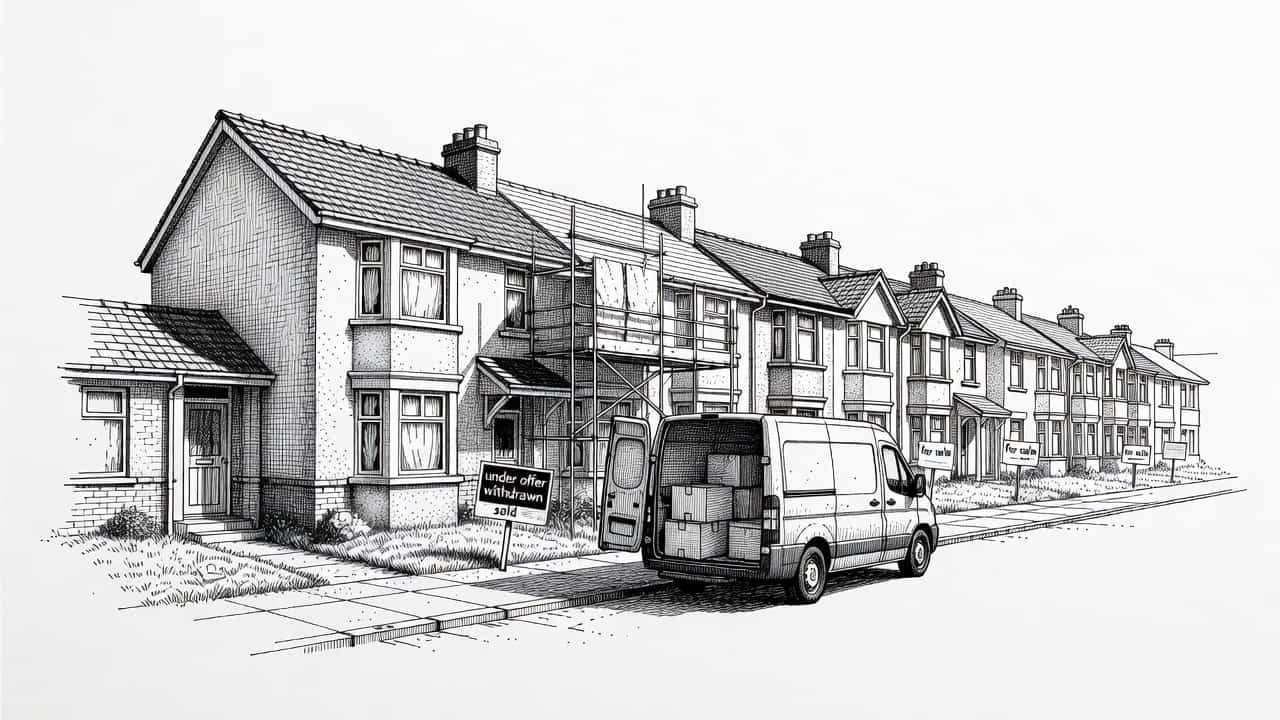
The question sits inside a longer argument about who bears the risk in "affordable" housing products sold as a stepping stone onto the ladder: whether shared ownership's flaws are a market failure the state should underwrite, or a bargain buyers accepted with eyes open, an argument that echoes wider unease about building safety defects and leasehold-style traps since Grenfell.
The floor's most respected Yes case framed unsellable shared-ownership homes as evidence that housing wealth has been hoarded rather than shared, asking why "one need a house and 20 rentals" when that could be twenty separate homes. The dissenting voice pushed back on the fairness of the fix itself, asking "why should other taxpayers be on the hook to bail out shared ownership homeowners" for a deal whose downsides, it argued, were priced in from the start.
A chamber this consistent across age groups rarely agrees on much in housing policy, which makes its verdict here less a generational skirmish than something closer to a settled instinct.




2 Opinions
Why should other taxpayers be on the hook to bail out shared ownership homeowners from what turns out to be a less then charitable deal? The house was affordable, as evidenced by the person buying it. That its harder to remortgage, and worth less then the equivalent house without a second owner, is part of the deal, no?
If a house designed to be affordable is unsellable, then the government should be able to rent or sell it as affordable housing as and when the choose too. Too many people are using homes as an asset for personal wealth, why does one need a house and 20 rentals? That’s twenty people who could have their own home…..