A question about historic liability was settled here less by a debate over remedies than by a refusal to make present taxpayers answer for ancestral crimes: No won by nearly ten to one. The imbalance was as striking as the margin; the page carried 34 No arguments and only two from Yes, with the floor’s most-respected case on the winning side.
The winning argument was not a denial that slavery was an atrocity, but a claim that responsibility had stopped with abolition and its costs. The highest-rated No voices pointed to a country that “was the driving force to abolish slavery and at a great expense”, making the proposed payment sound less like restitution than a new bill for people without a personal connection to the crime.
The Yes case was thinly represented, but it did offer a route beyond a simple cash transfer: “The issue is how funds are collected and how they would be distributed.” Its second voice suggested “preferential tax deals, defence support, industrial expertise”, a practical partnership rather than a lump sum; the two sides were often answering different questions, one about inherited liability and the other about useful support now.
That places the verdict inside the live argument over the UN’s reparations call, Caribbean claims and the UK government’s refusal of financial payments. The sharper distinction emerging from the page was between a national moral debt and a private financial one: “Reparations should be paid directly by the descendants of slave trading families.”
This was a decisive verdict, but not a settled moral vocabulary: the page knew what it would not fund more clearly than what acknowledgment should become.






37 Opinions
Is ending the slave trade not enough reparations? Noone today in the UK that is British has owned a slave, nor are the people that would benefit from the reparations a slave by the British.
Look up barbary pirates ,the vikings also took slaves .People have been enslaved all around the world by many different nations who themselves went on to enslave we would all be paying each other
The slave trade was an undeniable atrocity, but asking modern taxpayers, many struggling to pay their own bill, to pay cash reparations for 200 year old crimes makes no sense. Regular people should not inherit the sins of 18th-century elites. Writing blank cheques to foreign governments does nothing for ordinary people and fuels bitter division on our doorstep
I'm rather glad my ancestors were indentured or I'd still be stuck in some awful part of the world where women are treated badly. Should I be paying back someone for the leg up?!
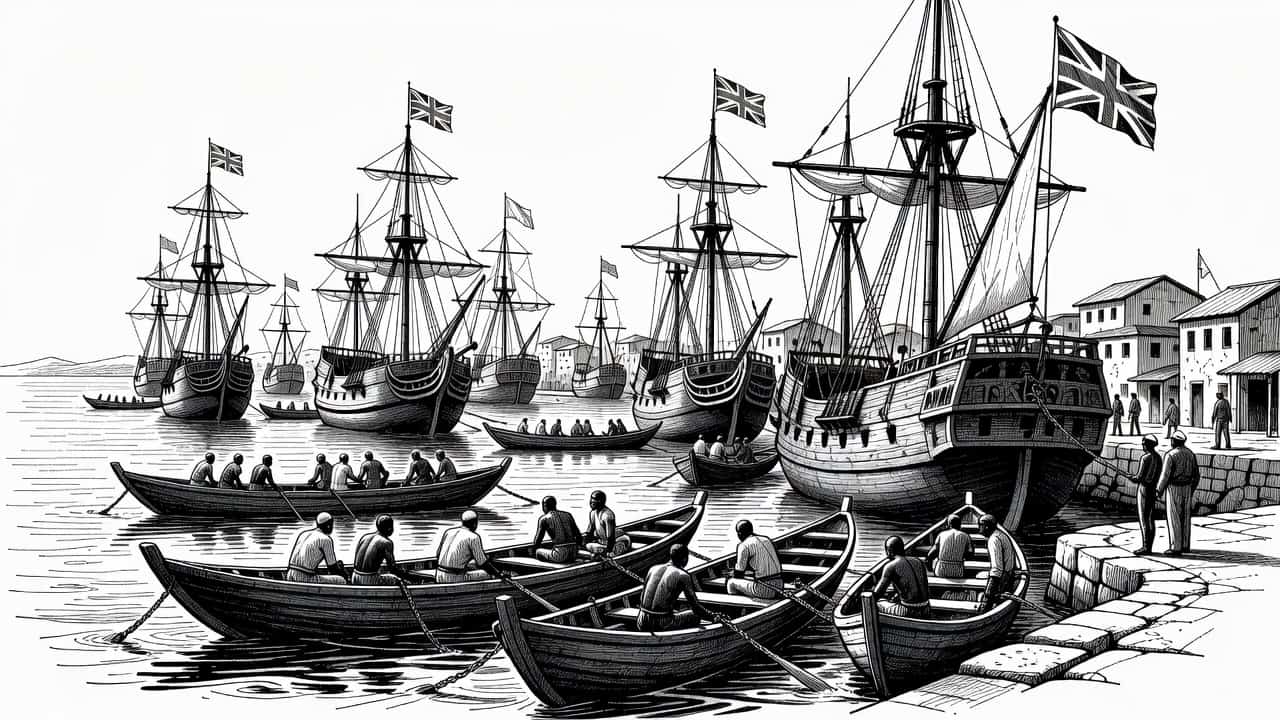
No reparations should be paid. Britain was instrumental in stopping slavery and spent huge amounts of money policing the seas to stop slavers.
Racists employ fatuous arguments that their lives should be significantly enhanced financially at our cost because of past deeds & as we are white.. Labour will succumb. But Islamic nations still practice slavery today in Africa - millions. Silence. The West Africans like the Ashanti in Ghana sold their people. Silence. Islam enslaved more white people than the Atlantic Slave Trade. Silence. UK alone stopped slavery & it cost £Billions & deaths of many sailors. Silence. See?
Are we Joking? Britain was the driving force to abolish slavery and at a great expense.
Anyone thinking we should needs to read about the role Britain played in ending the slave trade, at significant cost, with significant loss of life. Instead of focussing on centuries old practice where all parties are a long time dead, perhaps focus your energy on ending modern slavery, which still affects 50 million people today.
What would such a reparation actually achieve? The UK was first to ban the slave trade and was instrumental in persuading others to do the same. The privations and suffering of their ancestors are not genetically inherited. If it is simply to penalise the nation for historic guilt then how much is justified? Personally I feel no collective guilt for the actions of a small number of people two centuries ago and resent the premise that I should.
Making us accountable for the sins of our ancestors is a sure fire way to stoke the embers of a modern witch hunt. Can any of us really prove that our forebears, all of them, are entirely virtuous?