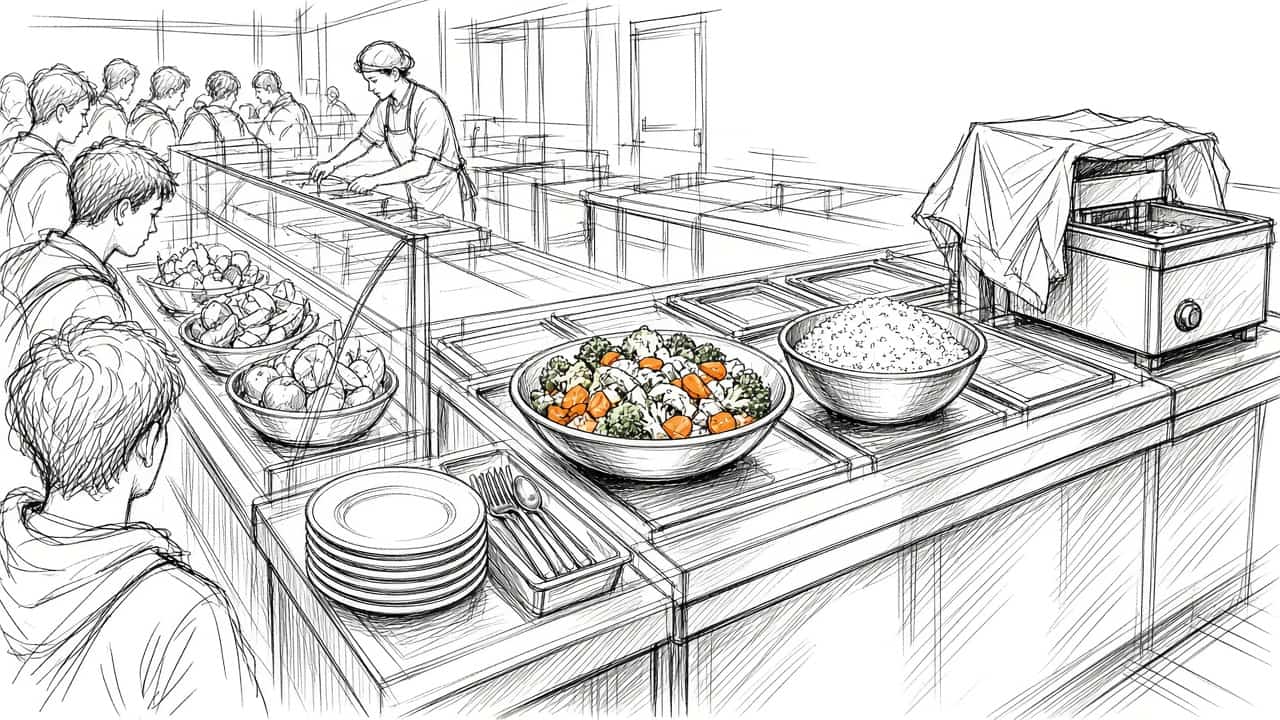
School meals became a proxy for a larger argument about state responsibility, and Yes won nearly three to one despite the most respected voice opposing it. A retired deputy head’s warning that “the children will not eat them” carried the room’s highest respect, making the result less a ringing endorsement than a decision to accept intervention despite its practical risks.
Yes voters argued that state-funded schools should guarantee something better than the cheapest available fare. One of the side’s strongest voices said “quality is always trumped by cheapness”, while another framed the policy as a basic obligation: “Every child deserves a healthy and filling meal.”
No voters were not uniformly opposed to healthier food; their objection was to compulsion, taste and the loss of discretion. The floor’s next-sharpest No case said, “I don’t approve of mandatory items and bans,” while another urged schools to offer food children would choose rather than dictate what they could eat. The two sides often talked past each other: Yes focused on the meal provided during school hours, No on sweets, snacks and responsibility beyond the dining hall.
The most concrete agreement was that rules alone will not rescue poor provision. A Yes voter warned that “Most Schools use 3rd party caterers and meals are heated in school kitchens”, while a No voice said plainly that “School meals are underfunded”; quality, funding and cooking were more persistent concerns than the ban itself.
The verdict is a vote for a healthier floor, not a blank cheque for the kitchens, budgets or appetites expected to deliver it.





42 Opinions
As a retired Deputy Head teacher I have experience of school meals. The meals produced are bland and over cooked. Removing salt, sugar and fat and subsidising with low grade ingredients means that the children will not eat them. In my primary school the children either refused to eat what was on their place or deliberately dropped it on the floor.. not all children are obese and many coming from deprived homes are in need of good quality nutritious food.
Odd its controversial, but typical of or Public sector. If State has any competence it should work to a budget but quality is always trumped by cheapness. When NHS Hospitals serve their patients an excess of unhealthy carbohydrates based on the discredited ‘food pyramid’ what chance do schools have? Any government that can instantly find £Billions for the Globalists war in Ukraine but penny pinches on healthy whole food -proper meat & vegetables is failing children.
This is a hard one because it breaks my heart to see so many obese kids but at the same time I'm not a fan of the over reach of the state. honestly I think making healthy food cheaper to buy in supermarkets might be a better option. And maybe offering more healthy choices at school that taste good is the way to go. Not telling kids what they can and can't eat. Help them make better choices but making those choices taste better than junk food.
I’m not sure why the labour state wants to control everything but ends up achieving nothing. School meals are underfunded - hence the reliance on pizza, fried food , and horrible ham sandwiches and pasta pots. Funding would enable meat, vegetables, dairy products - ideally from our own farmers and better balanced appetising meals. Look at the HoC subsidised menu to see how our egalitarian MPs eat.
I do support guidelines for state schools which promote healthy eating, whole food and not simply the same every week. I don't approve of mandatory items and bans. Food should be made interesting so that the children want to eat what is offered.
It’s not the school dinners making kids over weight it’s the sweets after school the munching and grazing all day outside of school. As long as some degree of nutritional balance can be achieved in a school setting let them decide on how to create meals that children will eat.
For sure kids are fat because school meals, nothing to do with what they eat between the meals. Virtue signaling still strong on the Left.
The Japanese do it properly. We could do as well if we tried.
It’s not the governments place force dietary restrictions on children it’s for the parents to educate their children. Schools should only be required to provide a nutritional menu whatever that may look like. The real issue here is the lack of activity some playing out and running around would solve the problem. Sitting in front of game consoles or on social media every spare minute is the real villain here.
But remember for some kids it’s the only meal they get in the day so eating is more important than being healthy. There are ways where food to be healthy without taking it all away