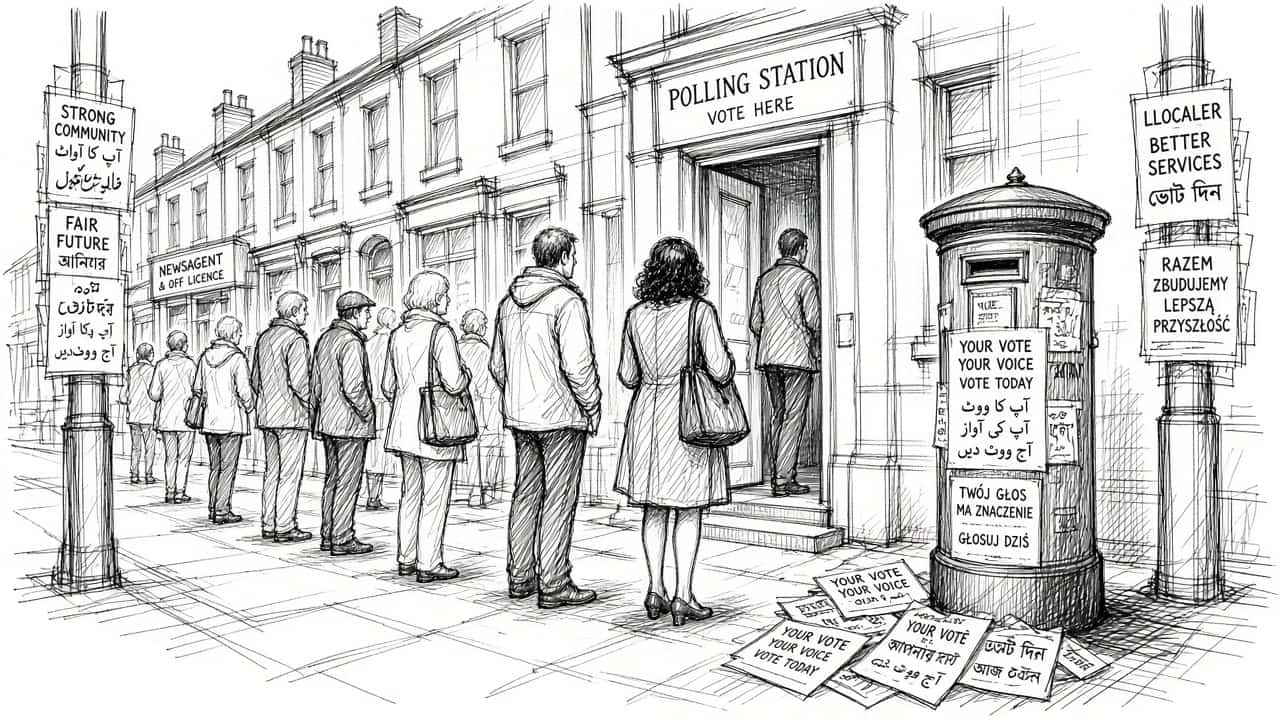
A question about campaign language became a much larger argument about citizenship, integration and who gets to participate. The result was emphatic, but the debate was not narrowly about advertising: Yes voters repeatedly folded voting rights and public services into their case.
The floor’s highest-rated Yes argument began with the citizenship test and asked whether “the ability to be able to speak English was a requirement”. Other well-regarded voices went further, objecting to parties appealing to “non integrating migrant enclaves where English is not spoken”, making the winning case as much about political belonging as campaign regulation.
No voters argued that understanding need not mean preferring English for every purpose. The side’s strongest voice described a Portuguese citizen who could communicate in English but whose “PREFERRED language to read long form info is Portuguese”; another insisted that “Everyone should be able to know what a political party or campaign stands for”. The two camps often talked past each other, with Yes treating language as a test of integration and No treating translation as a route into democratic life.
The wider argument is between a common public language and an inclusive state, with free speech hovering over the question. One No voter called any restriction “showing a lack of inclusiveness”, while a Yes voter dissented from their own side’s outcome: “political parties should not be restricted!” That split exposed a real distinction between limiting official communications and limiting what private political organisations may say.
Members delivered a clear preference, but its arguments were less tidy: a language rule opened into a vote on citizenship, representation and the boundaries of belonging.





40 Opinions
Correct me of I'm wrong but I thought the ability to be able to speak English was a requirement in the citizenship test? Or are people getting their cousins to sit that on their behalf like driving tests too?
It is ridiculous that this question should even be asked. Similarly all public officials and those performing customer service functions must be fluent in English - they are often not. One cannot Politically campaign in a foreign language to attract non native speakers votes. First unless they are fluent they should not be voters & certainly not the recipients of any benefits. It’s divisive and insulting and should be illegal.
Yes and elections should be strictly confined to citizens as well
The fact that they campaign in foreign languages just highlights how they have imported voters against the explicit wishes of the indigenous population! The numbers of foreigners in our parliament is nothing short of treason!
If people can't speak the language of the country they are living in it should be their own responsibility to get translations.
If you can’t speak the language of the country that you live in, you shouldn’t expect to have a say in how it is governed.
If you can’t speak English you shouldn’t have a vote. Parties should not be able to appeal to non integrating migrant enclaves where English is not spoken with these foreign language materials.
Voting should also be restricted to uk citizens
All government literature, NHS and any public institution should only provide English, Gaelic and Welsb translation services. If anyone does not speak any of these languages well enough then either a charity or a business should provide any translation required.
100% if you can’t speak English you should not be voting!