The headline number — a modest eight-point win for restricting Blue Badges to physical disability — undersells how divided the chamber actually was, because the real fracture ran along gender rather than age. Men backed the tighter rule by roughly two to one; women rejected it by a similar margin, a gap wide enough to suggest two different lived experiences of disability parking were talking past each other.
That split reads less as a culture-war divide than a proximity one: women here, more often the ones managing a child's meltdown in a car park or a relative's invisible illness, seem to have voted from experience of conditions the physical-disability test would exclude, while the men who carried Yes leaned toward a narrower, more visibly verifiable definition. It is the same tension that runs through official Blue Badge policy itself, which already stretches to cover severe respiratory and cardiac conditions precisely because "disability" resists a single visible shape.
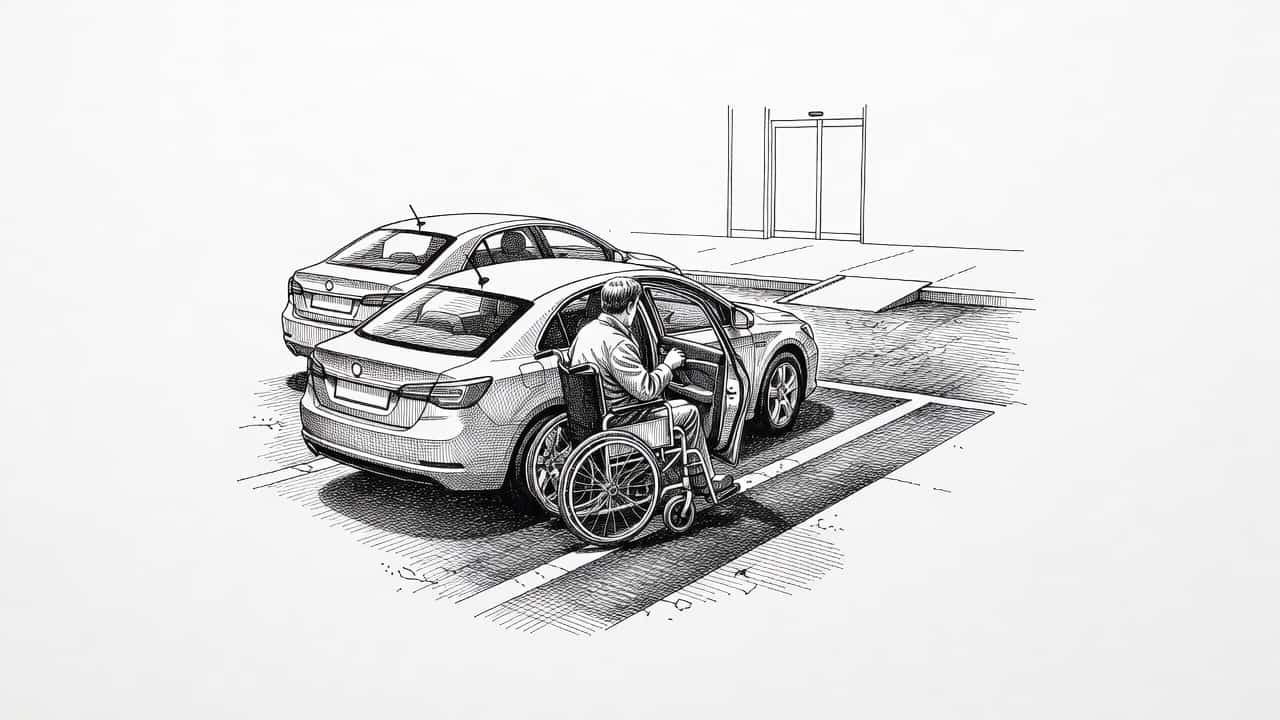
The result sits squarely inside the long-running row over badge misuse — able-bodied drivers taking spaces meant for wheelchair users — versus the equally real cost of tightening rules on people whose conditions are real but unseen, a tension that mirrors wider fights over what counts as a "legitimate" disability in benefits and access policy more broadly.
The floor's most-respected Yes voice kept it simple: "If your disabled and actually need a blue badge it should be for people who cannot walk far." The top-rated No voice pushed back with a personal case for hidden conditions, describing "a non verbal autistic child who can walk fine but doesn't understand why they have to hold their parents hand for a full length of the car park," and noting the argument was "something close to my heart."
A narrow Yes, then, but one built on a visible-versus-invisible fault line that the vote exposed far more starkly than it resolved.




5 Opinions
An autistic child might not "look like" an autistic child 90% of the time. Attempting to get a seemingly fine looking autistic child from one end of a busy car park to another places that autistic child at great risk. You can argue the same for a great many mental disabilities that are not immediately "visible" because they are not necessarily physical.
If your disabled and actually need a blue badge it should be for people who cannot walk far.
A disability can be a range of different types of “illness”. What if it’s a non verbal autistic child who can walk fine but doesn’t understand why they have to hold their parents hand for a full length of the car park? Or they could be allowed to get out the car and go straight into the shop causing far less stressful situations. Speaking from experience this is something close to my heart as I have a family memeber with the above condition.
Seems obvious - if it's hard to walk due to a physical disability, the spot is for you. If you're just a bit dim, you can probably walk fine. If you're mentally shot, you probably get driven by someone else anyways. Situational but yes.