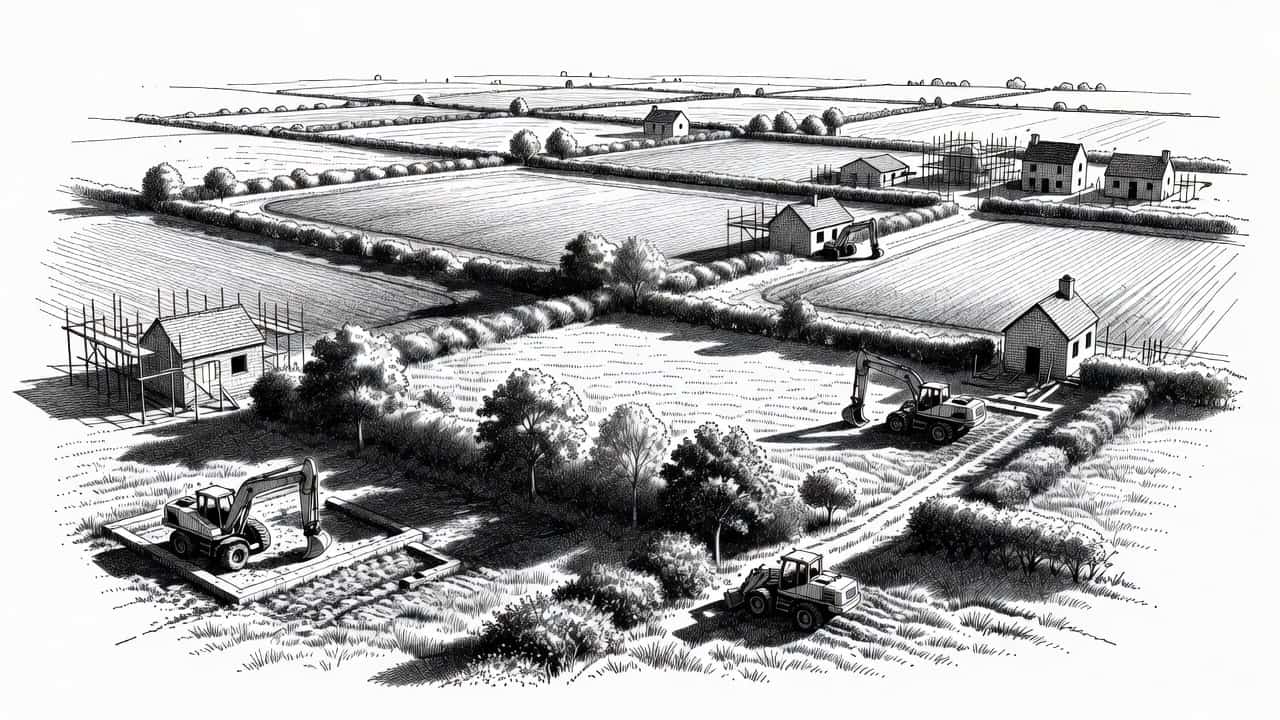
The chamber's instinct was less "not in my back yard" than "not on this land at all" — the housing crisis is real, but asked to trade fields and farmland for it, voters overwhelmingly said no, by nearly three to one. That is not a marginal preference; it is a settled scepticism about where the axe should fall.
The generational pattern is the tell. The 25-34s, the cohort most likely to be priced out of ownership, were the only group to lean towards yes, splitting close to evenly, while every older bracket from 35 upward dug in against building on greenbelt and arable land, some by four or five to one. That is the housing crisis's central paradox on display: the people who need homes most are readiest to sacrifice countryside for them, while those already housed are least willing to see it go.
The result echoes a long-running fault line in English planning politics, the one that has stalled mayoral and government attempts to release protected land for years — a public that wants more homes built somewhere, but rarely concedes that "somewhere" should be the fields or belt near them. It also sits awkwardly against food-security anxieties sharpened by recent global supply shocks, which give arable land a harder edge than mere scenery.
What tipped the floor's mood was less romantic attachment to the countryside than a practical grievance: the top-rated argument, from rjane, insisted that "land banking should be illegal first" and that builders "sit on land they already own" rather than exhaust brownfield options — a case against the premise of the question as much as its substance.
Britain's housing shortfall, on this evidence, remains one everyone wants solved and almost nobody wants solved on their own doorstep, or their neighbour's field.




6 Opinions
Just kick the migrants out and allow the use of empty homes that foreign interests own. No need to further stunt our already-limited food production capabilities.
Land banking should be illegal first. Builders want greenbelt as its easier to build on fields that on previously developed land. We need our green spaces and our farmland, and there is plenty of other space for housing if the big builders just stop sitting on the land they already own. Tax them on it.
Less people not more housing.
No, stop destroying our precious greenbelt land! Stop this madness before we're nothing but an urban trash heap. None of this is sustainable!
There's no need to use farm land for houses, particularly as post Brexit we need as a country to become more able to grow food to feed our country. There's plenty of derelict houses & brown field sites, including empty factories, industrial sites in & around our towns & cities that already has the required infrastructure (drains, roads & utilities etc) that would be more suitable for redevelopment into proper well built affordable homes, council houses & 1st time buyers
The solution to building my houses does mean we ruin farmland that could be used for growing crops on and therefore reducing our need to import food. And a greenbelt is exactly what it says on the tin a green belt to stop urban sprawling