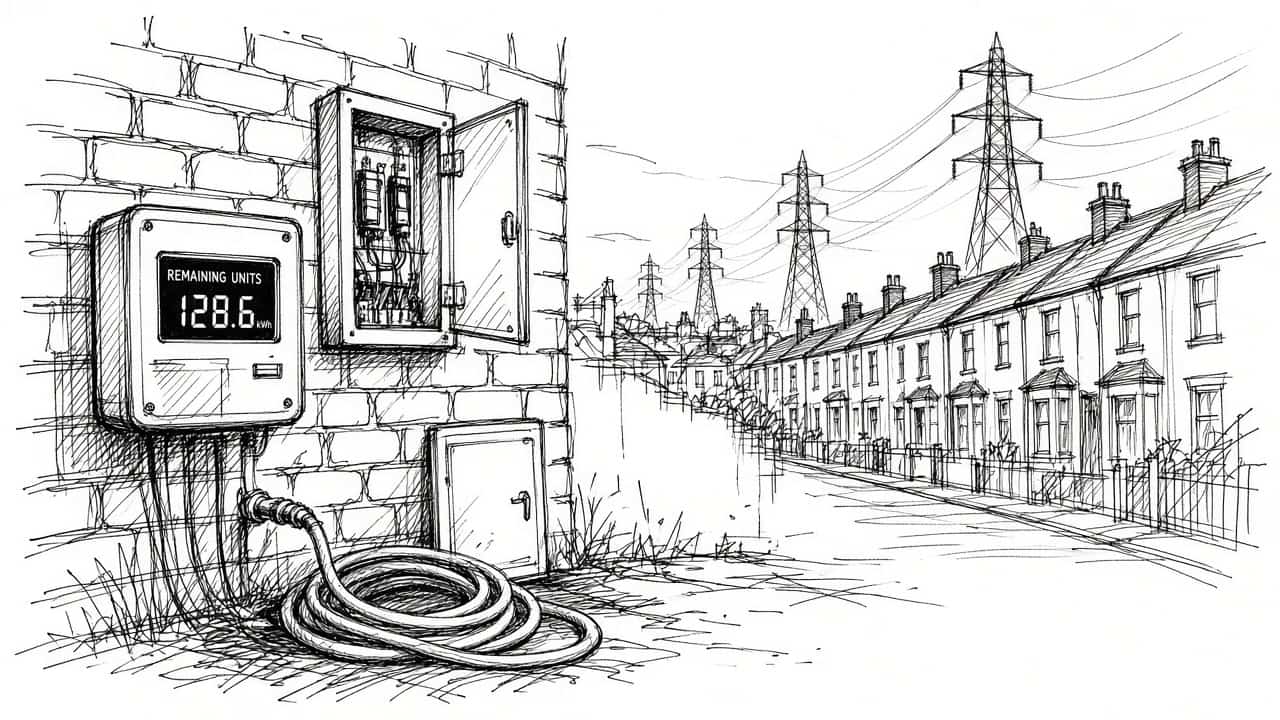
Should the UK replace domestic energy billing charges with a fixed allocation of units at a fixed price?
EnergyEnded 22 Sept

Should the UK replace domestic energy billing charges with a fixed allocation of units at a fixed price?

Yes 38%No 62%1,087 votes cast

UK domestic energy bills consist of a daily standing charge of around 86p for dual fuel plus unit rates, currently capped by Ofgem at levels that add about £315 a year in fixed costs before any usage. Recent reforms have shifted some policy costs like the Warm Home Discount to unit rates and piloted lower standing charge tariffs, while proposals for rising block tariffs or universal basic energy suggest subsidised rates for initial consumption blocks to aid low users. The idea of a fixed allocation at fixed price would fundamentally alter this by rationing a set volume rather than charging for all usage.

Jump to opinions· 23

The decision was less an endorsement of the existing billing regime than a rejection of rationing by another name. The shared complaint was that bills are hard to understand and standing charges feel detached from use.

No’s case was not a defence of today’s system so much as a warning against replacing complexity with control. The floor’s strongest No voices asked, “Can we PLEASE stop distorting the market for five minutes?”, while another offered “A cautious No as I don’t know enough about this” — a revealing mix of principle and uncertainty.

Yes had fewer voices, but its most-respected case attacked the standing charge as the real injustice. It proposed “a guaranteed baseline allocation at a fixed, affordable price”, with one Yes voter arguing that “Energy prices should have only one tariff”.

The sides agreed that energy billing was needlessly tangled, then parted over what to do about it. Yes saw protection for vulnerable households; No heard a threat to the link between consumption and cost, insisting: “You should pay according to what you use, not be forced to pay for what you don’t.”

That places the vote inside the wider argument over whether energy reform should discipline suppliers or reshape consumer behaviour. The room wanted simpler bills, but not at the price of surrendering the principle that usage should count.

“Energy prices should have only one tariff that’s it everything else should be scrapped. It is deliberately complicated so energy companies can trap you in contracts to buy from them or extract as much money from you as possible. It is also made overly complicated to make transferring difficult and daunting. Energy companies should only have one price no contracts no deals just one price day and ni”

YES case · DavidHughes · 3 respects

“A cautious No as I don’t know enough about this. Smart meters were promoted deceitfully as they permit power to be rationed & shut down under the false guise of savings & management of one’s consumption. The Grid is seriously failing through lack of investment - a prime example of the right investment choices not being made by Govt - think about this the next time Socialists whine about Water pri”

NO case · JohnnyBoy · 2 respects

62%
No
majority
38% Yes
Votes1,087
Skipped71
You—

% voting yes, by leaning

72% yes among H. Left voters, 57 of them
50% yes among Left voters, 127 of them
49% yes among C. Left voters, 117 of them
44% yes among Centre voters, 100 of them
44% yes among C. Right voters, 150 of them
31% yes among Right voters, 429 of them
15% yes among H. Right voters, 124 of them
H. Left
Left
C. Left
Centre
C. Right
Right
H. Right
Early result

This referendum settled before 29 September 2026, when refnation's current method began, so its result is a plain count of Yes and No. It is kept here as an archive: refnation's record starts on 29 September 2026.

How results are calculated, and corrections

Spread the wordShare
Debate

23 Opinions

Sign in and vote to share your opinion.
The Unifier
Voted yesRight lean

Energy prices should have only one tariff that’s it everything else should be scrapped. It is deliberately complicated so energy companies can trap you in contracts to buy from them or extract as much money from you as possible. It is also made overly complicated to make transferring difficult and daunting. Energy companies should only have one price no contracts no deals just one price day and night. Competition will make sure that price stays as low as possible. Clarity.

The Power Broker
Voted noRight lean

Can we PLEASE stop distorting the market for five minutes?

JohnnyBoy· 695
The Hard-Right Contrarian Patriot
Voted noH. Right lean

A cautious No as I don’t know enough about this. Smart meters were promoted deceitfully as they permit power to be rationed & shut down under the false guise of savings & management of one’s consumption. The Grid is seriously failing through lack of investment - a prime example of the right investment choices not being made by Govt - think about this the next time Socialists whine about Water privatisation, Power will be rationed in favor of AI i.e.power cuts. Labour know.

The Perennial
Voted yesC. Left lean

I've said yes but its a Big Conditional Yes, if the price is set reasonably then it can help everyone if its set too high as energy companies would love it to be it could end up being completely unfair on the consumer in which case my answer would change.

The Fiscal Custodian
Voted noRight lean

No to rationing but the energy charging structure seems unnecessarily difficult to understand. It should be possible to forecast use predictably but it always seems to be a nasty surprise for one reason or another.

Estella· 651
The Drawbridge Guardian
Voted noH. Right lean

And who will decide what amount is given? … seems like the slippery slope to totalitarianism.

The Lean-State Law-and-Order Right
Voted noRight lean

A fixed allocation per household is how I’ve read this. “Rationing” energy is a very dangerous road to be going down.

Alexmunn· 558
The Border-Minded Realist
Voted yesC. Right lean

Pay for what you get

BenL· 608
THE NANNY-STATE ALLERGIC
Voted yesC. Left lean

A guaranteed baseline allocation at a fixed, affordable price eliminates predatory standing charges and ensures nobody freezes in winter. Provided the quota adjusts for disability medical kit and household size, it protects vulnerable homes while making luxury mega-consumers pay their fair share.

Bearcage· 440
The Border-First Budgeter
Voted noRight lean

You should pay according to what you use, not be forced to pay for what you don’t