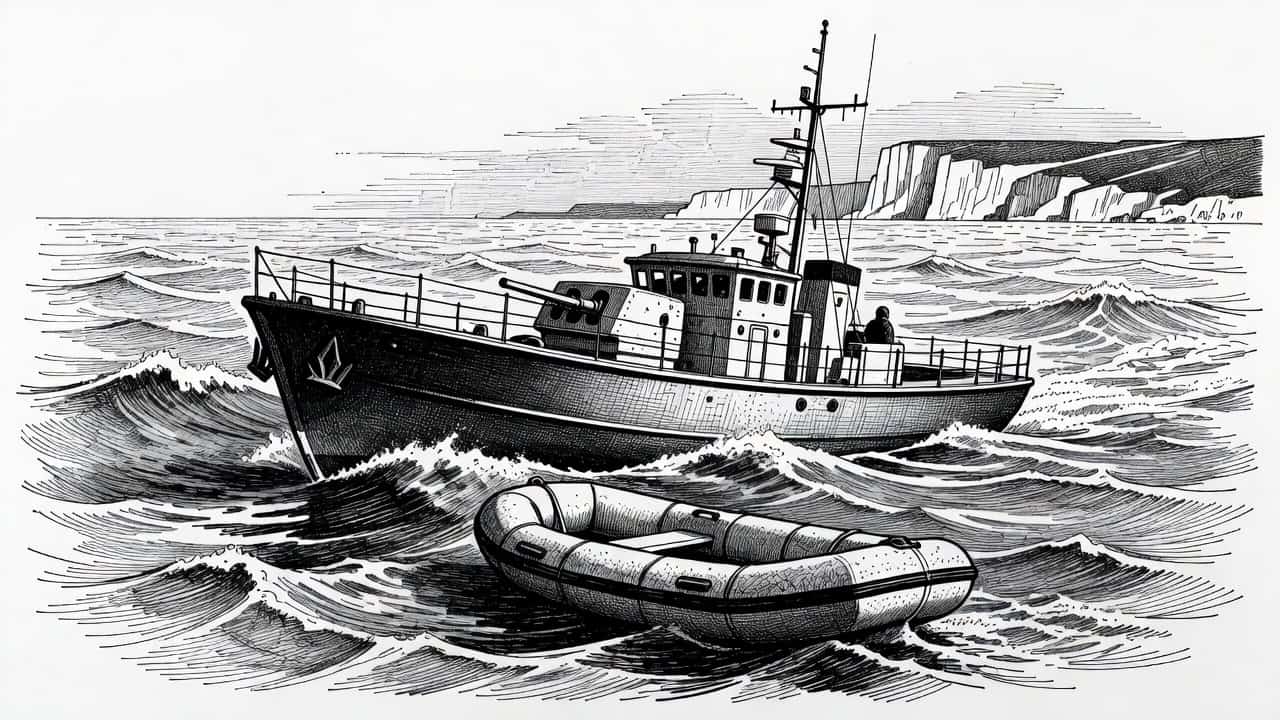
The headline is straightforward enough: 84 of 148 voters backed putting Royal Navy gunboats in the Channel against small boat crossings, a clean if not overwhelming win. But strip away the topline and the debate underneath tells a stranger story, because the arguments the floor actually rewarded with respect ran almost entirely counter to the result.
The Yes side, for all its numerical success, left barely a trace of argument on the page — just two opinions, neither attracting a single respect vote. One was terse to the point of shrug: "Yes and they should deter and return boats." The other reached for the starkest possible logic of deterrence: "You would only need to sink a few. The rest would get the message." Neither engaged with feasibility, law, or cost — the case for Yes was asserted here more than argued.
No voters, though outvoted, supplied nearly all the debate's substance and its top-rated lines. One pointed to hard numbers to undercut the premise entirely — a "32.6% reduction in migrant small boats from 2024-2026, which doesn't get widely reported" — while preferring resources go toward "tracking and arresting the organisers of this trafficking." Another questioned the whole premise of naval deterrence: "Are we willing to shoot? Thought not." A third raised operational limits, warning ships diverted to a "pointless vanity mission" would leave real border needs unmet, while a fourth invoked the human stakes directly: "the people who suffer most are women and children," calling gunboat interdiction "ludicrous and futile." The two sides barely met in the middle — Yes spoke in the language of deterrence, No in the language of law, capacity and consequence.
The split echoes the wider argument that has run through Channel policy for years, from Border Force patrols to the stalled Rwanda scheme — a public appetite for visible toughness set against practitioners and critics warning that hardware alone cannot substitute for asylum processing, returns agreements or naval rules of engagement.
The chamber voted for gunboats, but it argued, almost unanimously, about everything gunboats cannot do.






8 Opinions
Note: 32.6% reduction in migrant small boats from 2024-2026, which doesn't get widely reported. I would rather see funding spent on tracking and arresting the organisers of this trafficking.
Follow starters International law. Return to last safe Country. Charge French for any refused returns. Get dome ball s
Are we willing to shoot? Thought not. So, no. But we should have gunboats in the channel and the North Sea to warn off the Russian cruisers.
We should not be making a dangerous situation worse- the people who suffer most are women and children. We need a legal track for refugees and a fast processing turnaround. We should not be accepting young men who have no links to this country, but fighting them off in the sea is ludicrous and will be futile.
You would only need to sink a few. The rest would get the message.
UK vessels are still under maritime obligations to provide aid and therefore there would be no significant deterrent effect. Any illegal migrant should be immediately deported to the country of immediate departure and submit to the established UK asylum process. Those without documentation and proven to have wilfully destroyed it should be deported without recourse to legal immigration. Education campaigns in countries of origin should be promoted to discourage emigration.
No simply because we don't have enough ships to do the job. If they in the channel on a pointless vanity mission, they can't be used elsewhere where they're really needed! So any ships put there are there purely to appease a certain section of societies hate of immigrants, but will actually do nothing to protect our borders.
Yes and they should deter and return boats.