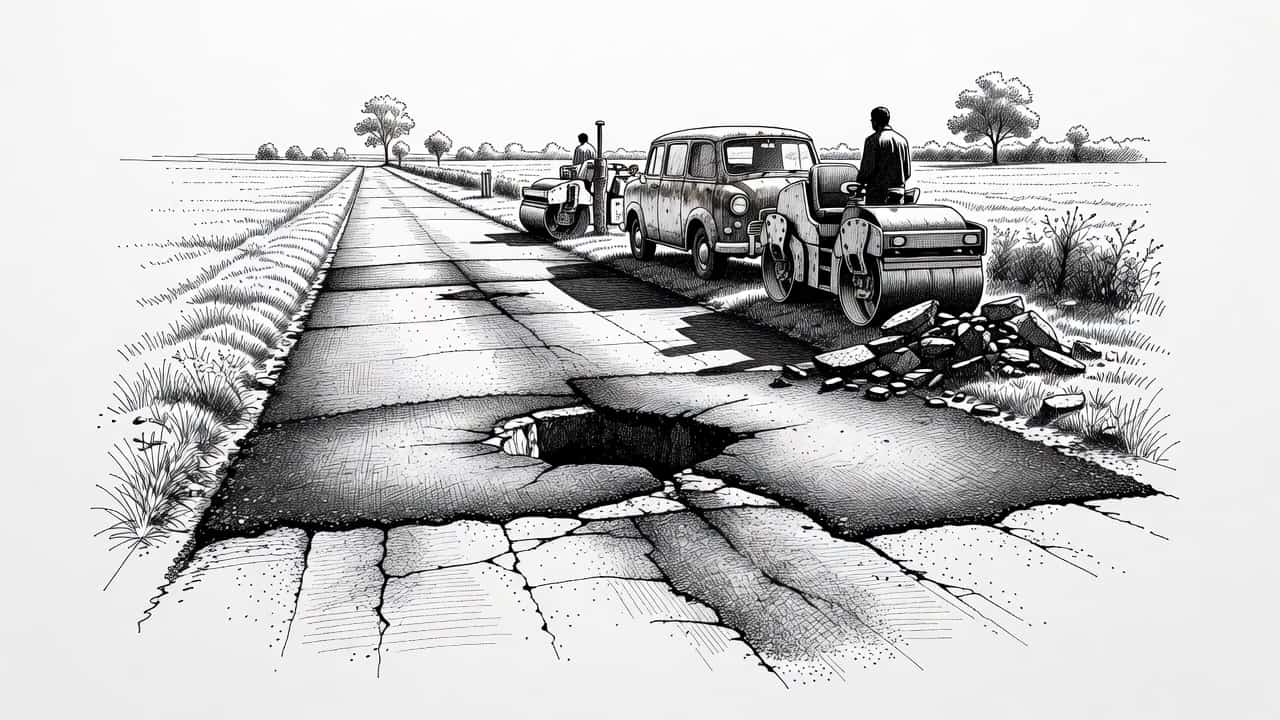
There was no real argument on the substance, only a question of how loudly to say it: four in five voters across every age and gender group backed ripping up the whole 200 yards rather than sending the crew back for a fourth patch job. That kind of consensus, on a platform that usually finds a fight somewhere, tells its own story about how little faith the public has left in the "quick fix" as a genuine fix.
The only wrinkle worth reading was generational. The over-65s were markedly less convinced than everyone else, the one group where a real minority held out for the cheaper option, while the youngest and middle-aged cohorts backed resurfacing almost as one. That may say less about road engineering than about who feels every pound of council spending most keenly, and who has simply watched the same crater get filled in for longer.
The vote lands on a familiar fault line in local government finance: short-term patching to keep this year's budget line small, versus capital spending that pays off over a decade but requires someone to sign off a bigger number now. It is the pothole version of every underfunded-maintenance argument in British public life, from the NHS estate to the railways.
The floor's top Yes case made the technical argument for treating this as a design failure, not bad luck: a patch "will never fully bond to the loose material on the edges" and wears out faster than a resurfaced strip. The most-respected No voice took the debate somewhere darker, wondering whether repeat failures point not to inherent flaws in patching but to "wrong materials and technology" and the cheapest contractor winning the tender, "some corruption may be involved."
Councils patch the crack; voters here would rather see the road.




4 Opinions
I would suspect usage of wrong materials and technology. Such fixes should have a few years guaranty, but probably the cheaper contractor is selected and who knows - some corruption may be involved.
Filling in a pothole is a temporary fix, but it will never fully bond to the loose material on the edges. The constant friction over the surface will wear this down far faster and that is the reason why we keep having to fill these in. If we resurfaced roads with proper tarmac instead of stones sprayed with a tarmac coating our roads would last a lot longer in general
NO... If the pot holes where fixed properly using the correct materials 1st time there would be no need to do the job 3 times or resurface such a large area costing a fortune to do..
A pothole happens, and is (eventually) filled. It comes back (inevitably) and is patched again. The third time it happens, it's proof there is now a fundamental weakness in that spot. So rather than a simple patch again, it's time to fix and redo the surrounding road area to prevent the problem from recurring.