Verdicts · Defence
Defence referendums: how members voted
Settled referendums
64
since Jun 2026
Votes cast
26,081
all time, on defence
This week
1,779
votes · 1 referendums settled
Written opinions
968
all time, left by voters
Best of each side this week
Most respected on defence this week
- HonestCompass656 respects
- SheerTally3 respects
- JustFactsNotBeliefs6 respects
- Octig4 respects
- ChasNewport9 respects
- Bearcage8 respects
How defence results lean
This week—Last week—All timeC. RightMost active regions this week
Voters
Votes each week
1,779 so far this week
All-time defence highlights
Biggest landslide
NO 93%
Should the UK suspend its NATO membership whilst Donald Trump is President?
93% of 990 votes went the same way.
Closest result
50 / 50
Should the UK build hybrid warships instead of new destroyers?
Dead level — an exact tie.
Most debated
YES 51%
Should the UK build the proposed ‘Britannia Shield’, an Iron Dome-style national air-defence system?
105 written opinions.
This week
1 settled · 1,779 votes
majority
% voting yes, by leaning
Should SAS soldiers face murder investigations over killings during missions against ISIS?
The verdict
No won comfortably, but its most-respected voice conceded the Yes principle: wrongdoing must be investigated. The dispute was over who does it, with one No voter insisting only soldiers can, and one Yes voter insisting on answering for actions.
Last week
2 settled · 3,300 votes
majority
% voting yes, by leaning
Should the UK have to hold a referendum before going to war, unless it is attacked first?
The verdict
Voters overwhelmingly rejected a war referendum, and the best-rated line was a rebuke: “you lost the election, get over it.!” Even sceptics of the elite said war won't wait for a ballot.
majority
% voting yes, by leaning
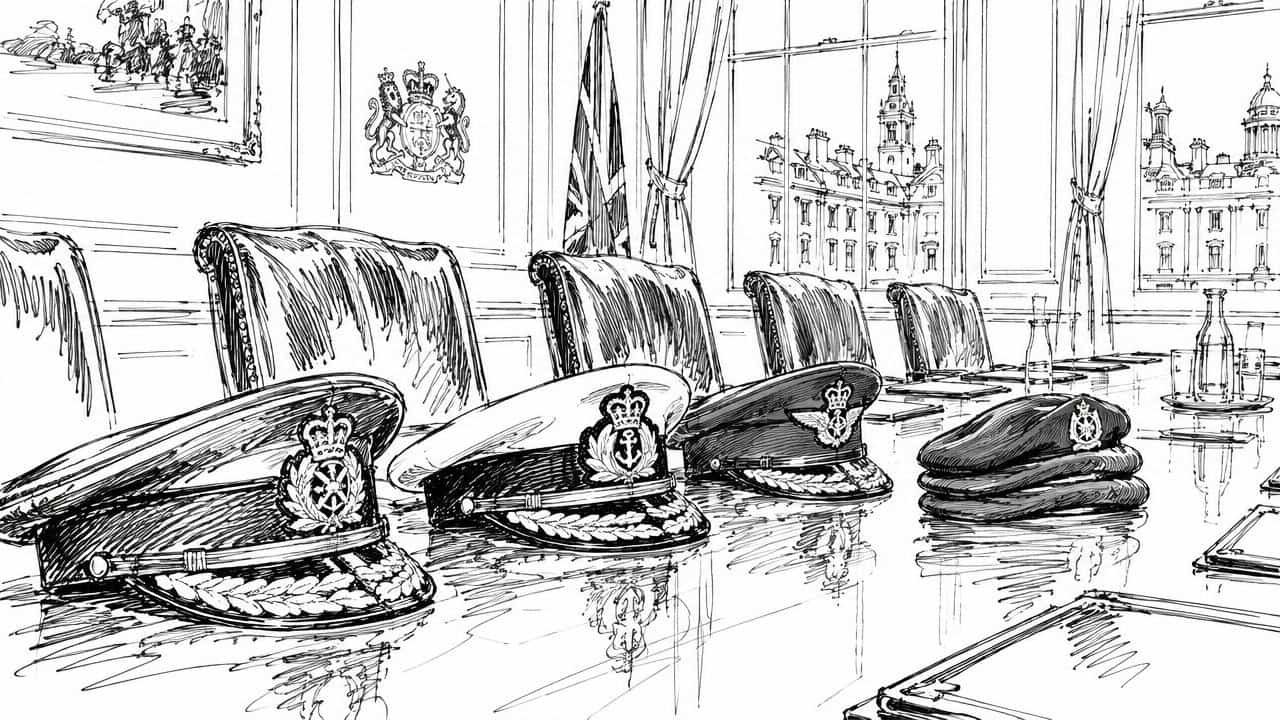
Should the armed forces cut the number of senior officers?
The verdict
Voters comfortably rejected cutting senior officers, yet the Yes side had the best jibe: “The Navy with more Admirals than Ships.” The No case answered with a different fix: more troops, and experience kept for a rapid expansion.
Every defence verdict
- Should SAS soldiers face murder investigations over killings during missions against ISIS?NO 66%1,779 votes · 20 Oct
- Should the UK have to hold a referendum before going to war, unless it is attacked first?NO 74%1,800 votes · 19 Oct
- Should the armed forces cut the number of senior officers?NO 59%1,500 votes · 16 Oct
- Should everyone pay a dedicated tax to fund the UK’s defence?NO 82%1,607 votes · 12 Oct
- Should the UK build the proposed ‘Britannia Shield’, an Iron Dome-style national air-defence system?YES 51%1,523 votes · 7 Oct
- If IRGC involvement in the RAF Fairford bomb plot is proven, should the UK take military action in response?NO 54%1,253 votes · 29 Sept
- Does the Chagos Islands deal threaten UK-US security ties?YES 77%1,174 votes · 26 Sept
- Should the UK establish a "National Centre for Information Defence" to counter foreign information attacks?YES 54%1,172 votes · 25 Sept
- Should able-bodied migrants serve in the military during a wartime emergency?YES 67%1,146 votes · 25 Sept
- Should Britain be giving military support to Saudi Arabia to fight the Houthis in Yemen?YES 60%1,142 votes · 23 Sept
- Should the UK train a civilian reserve now rather than wait until war makes mass mobilisation necessary?YES 60%1,113 votes · 21 Sept
- Should the UK suspend its NATO membership whilst Donald Trump is President?NO 93%990 votes · 19 Sept
- Should the government delay ordering new Royal Navy attack submarines to reduce pressure on public finances?NO 79%927 votes · 17 Sept
- Should people have a right to say no to conscription without punishment?YES 65%731 votes · 12 Sept
- Should new public infrastructure projects include dedicated funding for civil defence shelters?NO 60%606 votes · 8 Sept
- Should the UK stop working with the US on the replacement of Trident in favour of a European joint venture?NO 55%597 votes · 7 Sept
- Should the UK defend the Falklands from its requested recovery from the Argentine President?YES 92%606 votes · 7 Sept
- Is the government right to tell the army to stop non-essential training exercises to save money?NO 79%593 votes · 6 Sept
- Is delaying a firm date for 3% defence spending the right choice?NO 72%567 votes · 4 Sept
- Should a form of national service be introduced to help fix a divided nation?NO 58%572 votes · 3 Sept
Show all 64 verdicts ↓
- In the event of an armed conflict and assuming you are physically able, would you voluntarily join the UK military?NO 62%429 votes · 29 Aug
- Can the UK still recruit, retain and defend itself militarily if national unity has weakened?NO 64%291 votes · 24 Aug
- Should the UK send Ukraine more drones to strike targets inside Russia?YES 57%275 votes · 23 Aug
- Should the UK invest more in climate adaptation than in increasing military spending to 3% of GDP?NO 67%264 votes · 17 Aug
- Should the UK armed forces be deployed to protect national borders and assist checks at airports & coach, railway hubs?YES 56%268 votes · 16 Aug
- Should the United Kingdom increase spending on defence of the realm?YES 73%187 votes · 10 Aug
- Should the UK independently seize frozen Russian state assets to fund support for Ukraine?YES 58%179 votes · 10 Aug
- Should the UK develop an indigenous submarine nuclear missile delivery system independent of the USA?YES 69%149 votes · 7 Aug
- Does Russia's missile attack on Kyiv demand stronger UK support for Ukraine?YES 55%154 votes · 5 Aug
- Would launching the biggest peacetime rearmament make Britain safer?YES 68%132 votes · 28 Jul
- Should we reintroduce national service?NO 51%132 votes · 27 Jul
- Should the Ministry of Defence reimburse early years childcare costs for service families in Scotland, Wales and Northern Ireland?YES 63%114 votes · 26 Jul
- Should the UK recast its fiscal rules to fund higher defence spending?YES 64%135 votes · 24 Jul
- If Argentina were to invade the Falkland Islands again, would you support the use of force to recapture them?YES 85%120 votes · 23 Jul
- Do the British armed forces have sufficient independent capability to defend the UK from major attack without NATO suppo?NO 84%114 votes · 23 Jul
- Should the UK continue producing artillery gun barrels in Britain for Ukraine?YES 66%93 votes · 22 Jul
- Should Bulgaria allow up to eight US tanker aircraft to be stationed at Bezmer military base?YES 69%70 votes · 22 Jul
- Should Britain take back full control of its nuclear deterrent?YES 86%96 votes · 22 Jul
- Should the government spend an extra £15bn on defence from 2026 to 2030?YES 72%93 votes · 21 Jul
- Should the forces stay out of pride month?YES 63%104 votes · 21 Jul
- Should the UK further develop its nuclear capability for defence?YES 61%176 votes · 19 Jul
- Should the UK defence budget be judged by military readiness and capacity rather than just spending levels?YES 90%60 votes · 18 Jul
- Should Parliament approve the designation of Iran's IRGC and HAYI as terror groups?YES 83%58 votes · 16 Jul
- Would hitting 3.5% GDP on defence justify cuts elsewhere in public spending?YES 63%111 votes · 15 Jul
- Should the UK implement the 2025 strategic defence review's warfighting readiness reforms?YES 74%69 votes · 15 Jul
- Should the Defence Investment Plan prioritise turning spending into measurable military capacity over setting higher GDP percentage targets?YES 68%69 votes · 15 Jul
- Would higher NATO defence spending demands from Trump make Britain safer?YES 68%111 votes · 15 Jul
- Should the forces stay out of pride month?YES 63%89 votes · 12 Jul
- Does the UK need greater parliamentary scrutiny of its defence spending plans?YES 72%43 votes · 12 Jul
- Should the UK increase defence spending to meet NATO's new commitments?YES 76%45 votes · 11 Jul
- Should the UK government issue war bonds to fund its £300bn defence spending commitment by 2030?YES 51%43 votes · 10 Jul
- Should the UK government increase defence spending to 3% of GDP?YES 92%36 votes · 7 Jul
- Should the UK reduce its defence spending to fund more on employment, welfare and growth?NO 85%34 votes · 7 Jul
- Should the UK be focusing more on defence than welfare?YES 74%54 votes · 5 Jul
- Should the government spend an extra £15bn on defence from 2026 to 2030?YES 63%75 votes · 5 Jul
- Should the UK adopt a Hybrid Navy model under the 2026 Defence Investment Plan?YES 62%34 votes · 3 Jul
- Would Keir Starmer's defence spending plan leave a £5bn shortfall for his successor?YES 58%31 votes · 3 Jul
- Should the UK commit £8.6 billion to the Global Combat Air Programme?YES 63%19 votes · 2 Jul
- Should UK defence spending rise to nearly £80bn a year by 2029?YES 76%17 votes · 2 Jul
- Should the UK adopt the £13.5bn defence investment plan?YES 53%19 votes · 1 Jul
- Should the UK build hybrid warships instead of new destroyers?TIED30 votes · 30 Jun
- Should the next prime minister increase defence spending to meet the Moscow test?YES 86%21 votes · 30 Jun
- Should the UK create a climate security taskforce?YES 54%13 votes · 28 Jun
- Should the British Army buy 270 Toyota Hilux 4x4s for 11 Brigade?YES 63%27 votes · 27 Jun