
0%
Yes
majority
majority
14% No
Votes96
Skipped3
You—
% voting yes, by leaning
—
—
—
—
—
—
—
H. Left
Left
C. Left
Centre
C. Right
Right
H. Right
Should Britain take back full control of its nuclear deterrent?
The verdict
Sovereignty proved a near-unifying instinct: across nearly every age band voters backed reclaiming full control of the deterrent from its US dependencies, with only the youngest cohort showing real hesitation, as the chamber backed the move by six to one.

0%
No
majority
majority
41% Yes
Votes109
Skipped7
You—
% voting yes, by leaning
—
—
—
—
—
—
—
H. Left
Left
C. Left
Centre
C. Right
Right
H. Right
Will Andy Burnham make a better prime minister than Keir Starmer?
The verdict
Skepticism, not enthusiasm, greeted Britain's newest prime minister on the platform, where the chamber declined to bless Andy Burnham as an upgrade on Keir Starmer by roughly two to one against. There was little generational excitement to soften that verdict: the middle-aged, from the mid-40s through the early 60s, were the most resistant of all, while it was men who split closer to even and women who turned against Burnham more decisively, suggesting the doubt cut across the usual Labour coalition rather than sitting neatly on one flank.
0%
No
majority
majority
25% Yes
Votes138
Skipped0
You—
% voting yes, by leaning
—
—
—
—
—
—
—
H. Left
Left
C. Left
Centre
C. Right
Right
H. Right
Should Mo Farah get his knighthood removed?
The verdict
This one barely divided the chamber at all, which is itself the finding: knighthoods, in the voters' minds, are apparently not conditional on the honouree's honesty about their own life story, only on the law catching up with them. Sir Mo Farah's revelation that he was trafficked as a child and had lied for years about his identity did not, for four in five voters here, amount to the kind of disgrace that has stripped others of their "Sir" — and no age band bucked that consensus. The over-65s were the most unforgiving of all age groups on the question, yet even they landed firmly on the same side as everyone else, suggesting this wasn't generational sympathy so much as a shared sense that deception told to survive trafficking sits in a different moral category to fraud or criminality.
0%
Yes
majority
majority
22% No
Votes138
Skipped0
You—
% voting yes, by leaning
—
—
—
—
—
—
—
H. Left
Left
C. Left
Centre
C. Right
Right
H. Right
Does trial by media undermine fair justice in the UK?
The verdict
Every age band on the platform lined up in near-identical agreement, which is the real signal here: this was not a generational argument but something closer to consensus, with four in five voters across the board judging that trial by media corrupts fair process, on a night when the age split barely moved the number a single point. The gender read cuts differently, and more sharply, than any age gap. Men here backed the "yes" case emphatically, while the small group of women who voted split straight down the middle — suggesting the sexes are simply not reading the same coverage, or not trusting it the same way, when it comes to judging whether the press has replaced the courtroom.
0%
No
majority
majority
40% Yes
Votes136
Skipped0
You—
% voting yes, by leaning
—
—
—
—
—
—
—
H. Left
Left
C. Left
Centre
C. Right
Right
H. Right
Does treating the Widdecombe murder as terrorism strengthen public confidence in UK justice?
The verdict
The chamber's doubts here were not really about whether Ann Widdecombe's murder fits the legal definition of terrorism, but about whether anyone should take the authorities' word for it — a scepticism that carried No to a clear win, 82 votes to 54.

0%
Yes
majority
majority
20% No
Votes142
Skipped0
You—
% voting yes, by leaning
—
—
—
—
—
—
—
H. Left
Left
C. Left
Centre
C. Right
Right
H. Right
Does the Muslim and Jewish debate dominate UK politics too much?
The verdict
Fatigue rather than division carried this one: four in five voters said the Israel-Gaza debate has crowded out British politics too much, a verdict so broad it barely split by age or sex, though the 55-64s were the most reluctant to say so.
0%
No
majority
majority
47% Yes
Votes131
Skipped0
You—
% voting yes, by leaning
—
—
—
—
—
—
—
H. Left
Left
C. Left
Centre
C. Right
Right
H. Right
Will Farage be Reform leader by end of the year?
The verdict
The chamber that once carried Farage to Brexit victory now can't agree whether he'll even keep his own job, with a narrow no putting the odds against him lasting the year as Reform leader on 47% support for yes. That the doubt runs thickest among the youngest voters, who broke against him most heavily of any age group, hints at a generational read of Farage less as an insurgent and more as an ageing brand facing internal rivals and a security row of his own making.

0%
Yes
majority
majority
31% No
Votes110
Skipped0
You—
% voting yes, by leaning
—
—
—
—
—
—
—
H. Left
Left
C. Left
Centre
C. Right
Right
H. Right
Did Dale Vince receive favourable government contracts in return for his donations to Labour?
The verdict
A chamber that skews older and male, and leans towards suspicion of political money more than most, decided by two to one that Dale Vince's Labour donations look like pay-for-access — with 76 of 110 voters siding against the "just following the rules" defence.
0%
Yes
majority
majority
36% No
Votes102
Skipped0
You—
% voting yes, by leaning
—
—
—
—
—
—
—
H. Left
Left
C. Left
Centre
C. Right
Right
H. Right
Should the threshold increase for the higher rate of income tax?
The verdict
Fiscal drag has quietly reclassified a fifth of taxpayers as "higher rate" without a single budget vote raising the rate itself, and the chamber's answer — a clear two-to-one call to lift the £50,270 threshold — reads less like a tax cut demand than a complaint about stealth.
0%
Yes
majority
majority
44% No
Votes101
Skipped1
You—
% voting yes, by leaning
—
—
—
—
—
—
—
H. Left
Left
C. Left
Centre
C. Right
Right
H. Right
Are white British people treated like second class citizens by the authorities that are meant to serve and protect them?
The verdict
A narrow national majority answered yes to a question that treats grievance politics as measurable fact, but the vote's real fracture wasn't about race at all — it was generational, with the under-35s recoiling from the premise that the over-55s embraced almost two to one.
0%
No
majority
majority
32% Yes
Votes192
Skipped0
You—
% voting yes, by leaning
—
—
—
—
—
—
—
H. Left
Left
C. Left
Centre
C. Right
Right
H. Right
Should Keir Starmer be tried for treason over his immigration and cultural policies?
The verdict
Even a chamber willing to entertain the question could not stretch the word treason to cover a prime minister's asylum and border policy, with voters here rejecting the charge by nearly two to one — a verdict less about Starmer's record than about the legal weight of the word being asked to carry.

0%
Yes
majority
majority
17% No
Votes192
Skipped0
You—
% voting yes, by leaning
—
—
—
—
—
—
—
H. Left
Left
C. Left
Centre
C. Right
Right
H. Right
Should the British people have control over their own public utilities?
The verdict
Five to one is not a debate, it is a verdict: on public utilities the chamber sided emphatically with public control, 159 votes to 33, a margin that crosses every generation on the platform.

0%
Yes
majority
majority
47% No
Votes192
Skipped1
You—
% voting yes, by leaning
—
—
—
—
—
—
—
H. Left
Left
C. Left
Centre
C. Right
Right
H. Right
Do acts of violence by left-leaning groups reflect an inherent trait?
The verdict
A question built to resist a clean answer got one anyway, with the chamber narrowly agreeing that left-wing activism carries an inherent violent streak, even as the age pattern beneath the six-point margin told a story of generational memory rather than settled fact.
0%
Yes
majority
majority
39% No
Votes182
Skipped1
You—
% voting yes, by leaning
—
—
—
—
—
—
—
H. Left
Left
C. Left
Centre
C. Right
Right
H. Right
Does the Right ownership majority control of Newspapers and media influence British politics too much?
The verdict
This was a verdict delivered in a U-shape rather than a straight line, with the chamber's youngest and oldest voters converging on the same complaint about press power while the middle generations, those who came of political age through the New Labour and coalition years, held back.

0%
No
majority
majority
46% Yes
Votes181
Skipped0
You—
% voting yes, by leaning
—
—
—
—
—
—
—
H. Left
Left
C. Left
Centre
C. Right
Right
H. Right
Does the Right have a problem with violence?
The verdict
A narrow but telling No, in a vote timed to the shock of a sitting former minister's murder: this chamber, asked whether violence belongs to one side of politics, mostly answered that it belongs to neither — the margin was eight points, but the fracture beneath it ran through generation and gender far more than through party lines.

0%
No
majority
majority
35% Yes
Votes102
Skipped1
You—
% voting yes, by leaning
—
—
—
—
—
—
—
H. Left
Left
C. Left
Centre
C. Right
Right
H. Right
Has the UK government listened to its indigenous people and their concerns over the last 30 years?
The verdict
The chamber delivered a rout rather than a debate, with two in three voters here saying no government has genuinely heeded the concerns raised over three decades of demographic change, immigration and community cohesion.

0%
No
majority
majority
44% Yes
Votes222
Skipped1
You—
% voting yes, by leaning
—
—
—
—
—
—
—
H. Left
Left
C. Left
Centre
C. Right
Right
H. Right
Should the GLA and Mayor of London be abolished?
The verdict
The capital's own devolution settlement survived a scare, with voters rejecting abolition of the GLA and Mayor by a narrower margin than the 44-56 split suggests, given how firmly the youngest Londoners-in-waiting rallied to keep it.

0%
Yes
majority
majority
28% No
Votes93
Skipped0
You—
% voting yes, by leaning
—
—
—
—
—
—
—
H. Left
Left
C. Left
Centre
C. Right
Right
H. Right
Should the government spend an extra £15bn on defence from 2026 to 2030?
The verdict
The generational split tells the real story here: it was the middle-aged and older who backed the £15bn uplift most firmly, while the youngest voters in the chamber were the only group to reject it outright, a reversal of the usual pattern on defence spending.
0%
Yes
majority
majority
49% No
Votes176
Skipped0
You—
% voting yes, by leaning
—
—
—
—
—
—
—
H. Left
Left
C. Left
Centre
C. Right
Right
H. Right
Should the UK have more Bank Holidays?
The verdict
A question that should split neatly along generational lines about work and rest instead produced a coin-toss, with Yes prevailing by the narrowest of margins on a question that pits the economics of lost output against the politics of a stagnant-wage, longer-working-life workforce.
0%
No
majority
majority
46% Yes
Votes105
Skipped0
You—
% voting yes, by leaning
—
—
—
—
—
—
—
H. Left
Left
C. Left
Centre
C. Right
Right
H. Right
Should the two-child benefit cap be scrapped?
The verdict
Scrapping the two-child cap failed to find a majority even among a chamber narrowly split down the middle, with the closest thing to consensus being that nobody was terribly sure — the tightest age band, the 45-54s, broke for reform while the largest, the over-55s, dug in hardest against it, no group moving with real conviction either way.
0%
No
majority
majority
42% Yes
Votes99
Skipped1
You—
% voting yes, by leaning
—
—
—
—
—
—
—
H. Left
Left
C. Left
Centre
C. Right
Right
H. Right
Should the UK abolish the monarchy?
The verdict
The chamber kept the Crown, but only just, and not for any of the reasons a young republican might expect — it was the oldest voters, not the youngest, who tilted most towards abolition, scrambling the usual generational script on inherited institutions.
0%
Yes
majority
majority
42% No
Votes112
Skipped1
You—
% voting yes, by leaning
—
—
—
—
—
—
—
H. Left
Left
C. Left
Centre
C. Right
Right
H. Right
Does lowering inequality improve democracy in the UK?
The verdict
A generational divide did most of the work here: the under-35s backed the idea that flattening inequality strengthens democracy almost two to one, while the 35-54 cohort — squarely in the tax-and-spend middle years — swung the other way, before Yes recovered its lead overall on a 65-47 vote.
0%
Yes
majority
majority
37% No
Votes104
Skipped0
You—
% voting yes, by leaning
—
—
—
—
—
—
—
H. Left
Left
C. Left
Centre
C. Right
Right
H. Right
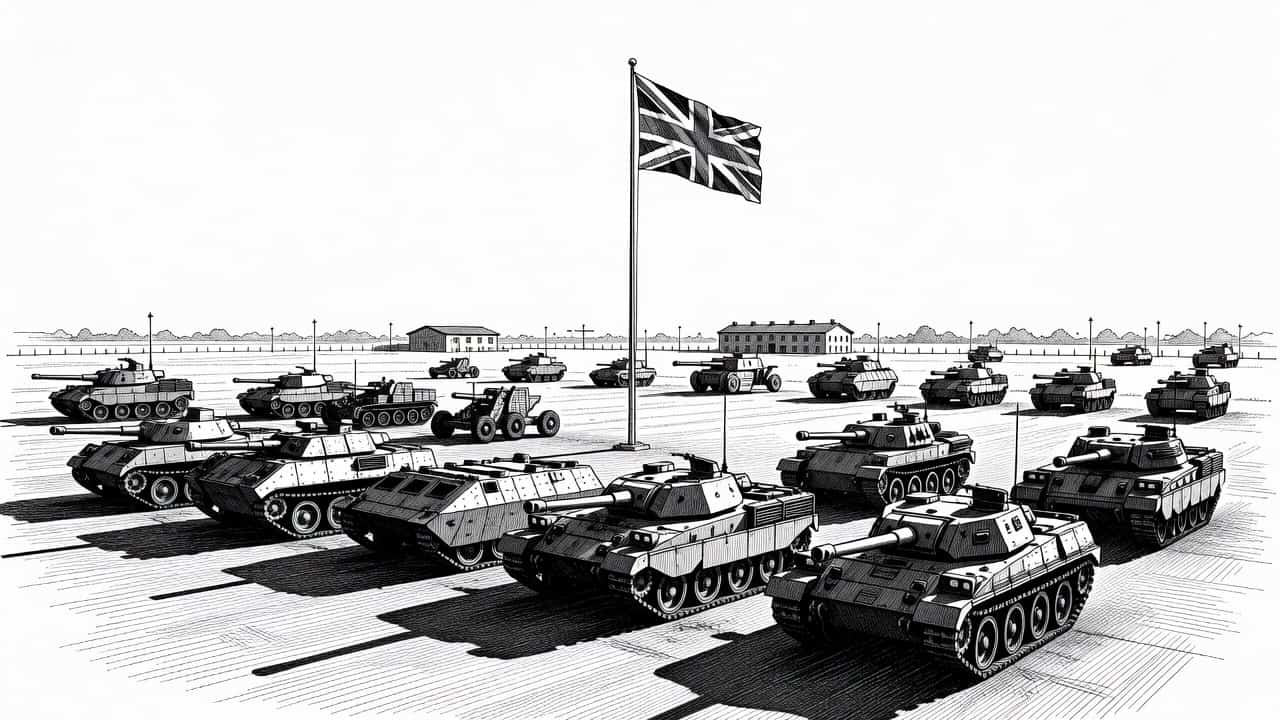
Should the forces stay out of pride month?
The verdict
The chamber came down for keeping the military out of Pride marches, but the age pattern ran backwards from the usual culture-war script: it was the youngest voters who wanted uniforms in the parade, and the middle-aged and older who wanted the forces to stand apart.
0%
Yes
majority
majority
31% No
Votes221
Skipped1
You—
% voting yes, by leaning
—
—
—
—
—
—
—
H. Left
Left
C. Left
Centre
C. Right
Right
H. Right
Should we reform the NHS so it works like the system in countries with better health outcomes per £ like FR, DE or CH?
The verdict
A system founded on faith in universal, tax-funded care found much of its own base ready to borrow from its continental rivals, with two in three voters here backing a move toward the insurance-style models of France, Germany or Switzerland.